Showing posts with label mull wildlife watching. Show all posts

Monday, 22 July 2013

Our chick is desperate to get up in the air!

We have had a mixed week of weather from sunshine to mist to rain and the chick has sat through all of this and at the same time wings flapping like mad !


During this week there has been a very International flavour at the hide with visitors from Wisconsin USA, Australia and families from from Austria & Germany.

Our male bird Fingal has been around a lot more this week flying in with food at regular intervals. Many small gosling have been eaten and often the nest if covered with white fluff and feathers! When Fingal lands on the nest, its like a hover craft coming in and blowing all the feathers up in the air, a sight to behold!

Iona watches over her chick at the nest

Iona has been sitting on the branch very close to the chick, to the right as you look at the nest. On Thursday, she sat there for five hours without flying off!

The hide will be open all summer until the end of August as the chick will stay in the area and they often come back on the nest for about a month, so please still come and see us.

Once the chick has fledged we will walk you through the Glen to observe all three birds.
Booking is a must and can be done by calling 01680 812556 or visit forestry.gov.uk/mullseaeagles for more info.

Blog published by Colin Baxter on behalf of Cheryl Callow, Mull Ranger

Friday, 5 July 2013

Our chick is nine weeks old today!

The chick is nine weeks today and is growing very fast.
It’s been amazing to watch the female Iona, who has been bringing in afterbirth from seals.
I have now seen this three times, it’s been a bit messy and Iona’s tail has been blood red instead of white!
The chick has been eating it very much like a piece of elastic at times, pulling up on stringy pieces of flesh like material.

I spent a private half hour on Friday on my own at the end last week, watching this wonderful sight. The feathers of the chick were drying out, after a morning of rain, and then sea mist. The feathers were just fluttering, in the slight breeze, so delicate to watch.

Our growing chick flapping
it's wings

The sharp beak is working well, and the chick is feeding itself. I realised that I have become very fond and very attached to this wonderful chick. What an honour it is to be able to watch this beautiful bird grow up.
My heart is in my mouth every time it flaps it's wings, building up its strength. It tends to move to the back of the nest and very close to the edge, if it was to fall out now it may not survive and could spell disaster!

I have got to say the groups that have been in the last week have seen some great views of the wings flapping. I am keeping my wings crossed that when I return from my holiday the wee young bird I have given the name 'Friday’s Chick’ will be safe and well. The chick will be named formally soon by a local school.
We are still waiting to hear what gender it is.

I thank every one who has visited us so far this season and thank you for all your emails, blog comments and trip advisor entries.

Please keep coming to see this wonderful chick and parents. John Clare ,the RSPB Ranger will be there ready for you. He likes chocolate and do laugh at his beak joke!
Bye for now Cheryl back on Monday 8th July 2013.
To book now please phone on 01680 812556

Blog published by Colin Baxter on behalf of Mull Ranger Cheryl Callow

Thursday, 27 June 2013

Busy times at the Mull Eagle Hide - our chick is growing up fast!

The chick is now 54 days and growing so fast! It is being well fed by its parents and since last week we have seen small goslings, a grey bird very much like a gull and today a bloody mass which looked like a placenta of an animal brought in to the nest.

The chick is very vocal now and will soon let you know when a parent bird is coming into the nest by its calling and looking up and around.

The nest itself has had some extra layers added but you can see at times the heat haze coming off the top and the flies from the dead bodies in the nest.

The wings have filled out now and there is much flapping happening. I just cannot get over the size of growth, come and see for yourself!

We has a large number of visitors last week, with several families returning to Mull to enjoy the wealth of wildlife. The weather has also been kind to us which always helps!


Great picture taking by one of our visitors Peter
 We have had several couples that come back up to the hide three to four times a week to observe and take photographs. We had one such couple Sharon and Darren, who were a delight to have in the hide and we really enjoyed their company.

Another couple, Peter and Monica, were also excellent company and provided wonderful fudge on their  visit! They sent in some wonderful pictures too , thank you to both couples for your kindness.


Picture of Iona taken by Matthew Syratt

We also had a lovely family who brought their daughter and granddaughter Chloe to the hide. She was treated to activity sheets and things to do during her visit. It is so lovely when parents bring the next generation to the hide and I thank Chloe's father Matthew for a great picture of Iona sitting out proud watching over her chick ...

On Monday we had Dervaig Primary school come to the hide. We had a great morning viewing the birds and I did a talk on some basic facts before RSPB ranger John escorted them to the forest hide. The feedback from the head teacher is that it was the best visit ever to the hide in all the years they have been taking the children. 


Dervaig school children visit Mull Eagle Watch


Just a reminder, that residents of Mull can visit the hide free. So call us to arrange your visit to this wonderful wildlife experience right on your doorstep!

With the Scottish school holidays starting at the end of the week, a trip to Mull may part of your plans, so don't foget to give us a visit. Call us to book on 01680 812556.

We look forward to seeing you!


Blog published by Colin Baxter on behalf of Mull Ranger Cheryl Callow

Friday, 21 June 2013

A visit from Radio 4 as we witness our growing chick

Last Friday the chick was growing at such a fast rate that all of a sudden wings appeared and they started to flap! I managed to catch this on camera whilst Iona looked on. I was amazed by the length of wings and the fine skeletal vision through the scope.
The new chick flaps it's wings as Iona looks on


The chick is now about 43 days old and being well fed by the parent birds. I have recently seen two shag brought to the nest with several other sea birds and fish . So far this season I have only seen two lambs in the nest.

After the ringing of the chick, the parent birds take it in turns to guard it, perching on a tree at close distance .

On Monday, we had a wonderful day with the children of Lochdonhead school coming to visit us, with the Head Teacher and three other members of staff . Some of the children and staff had not seen a White Tailed Eagle before.

Alongside this visit, we had Yvonne Slater visiting us from Radio 4 who was recording the event and the children's reactions to what they were seeing . We spent about an hour at the forest hide, enjoying the questions asked by the children, whilst John Clare and myself  gave them some interesting facts about the eagles, which the children enjoyed. The School staff were as excited as the children at what they saw and remarked on the size of this large chick with a white fluffy crown and a large beak.

When we came out of the hide to head back along the track, one of the parent birds flew over with its majestic white tail and head.  I saw its under carriage come down ( my technical talk ), with the massive talons and land with ease on a tree behind the hide.

The children were excited and gather round making noises of enjoyment and laughter whilst the teachers took the binoculars and focused in quickly. The staff were taken a back with what they had seen and a resounding wow!! came from our group .

Radio 4's Yvonne Slater with RSPB Ranger John Clare
 
At this point I was looking at Yvonne who had the big grey fluffy radio microphone boom. This was now wobbling as she too got so excited. I spoke to her afterwards and you could see from her eyes the emotional connection to these special birds. One of the school staff , who has lived on Mull for many years, commented that they had never seen a White Tailed Eagle, and today they got their wish!
The radio programme goes out later in the year I let you know when it's on ...

Monday afternoon brought a large group of 31 people to the hide. They saw the chick sleep, then wake up to stretch its wings. The adult birds were out of sight although we could hear them calling.

New hide discovered on Mull

The next day I was off on a Ranger walk north of the island where 14 very keen people joined me for a fantastic day.  During the trip, I found a new hide to watch the eagles and otters from ...

Back to the office today looking out at Ben More, John Clare and the wonderful chick , speak soon .....

To book a trip to The Eagle Hide please call in advance on 01680 812556

The blog is published by Colin Baxter on behalf of Mull Ranger Cheryl Callow


Thursday, 13 June 2013

Mull is in bloom as our eagle chick grows


Our chick is growing up

After this weekend I returned to the hide to find the chick had grown another two inches and the nest had a new dead sea bird in it . The grey fluffy chick from last week was now darker in colour and looking more like a bird.

The activity on Monday afternoon after the public had gone home was interesting as both parent birds were calling out and in the background I could hear the mew of the buzzard that was flying close to the nest. At one stage it reminded me of being a young girl at London zoo, the noise was immense.

Yellow flag on Mull
Yellow flag on Mull


The island has blossomed into the most wonderful colour as bluebells, yellow flag and iris’ are all out in bloom.

Its an amazing burst of colour that has happened in the last week. I spotted a yellow flag over looking Inch Kenneth as pictured.

Bluebells on Mull
Bluebells on Mull


We had some very good news that John Clare the RSPB ranger and myself,  passed our recent 'mystery shopper' examination who had visited during May bank holiday week.
Some questions and comments from the visit below -

Q Did a member of staff go out of their way to enhance the visit for you or another visitor ?

A "Both Cheryl and John were superb. They had passion for the site and were able to provide information either in answer to questions or as part of the tour. Both were outstanding in dealing with children."

We got 100 percent for staff service, skills and image.

Q One thing that could have improved this visit ?

A "Genuinely there was nothing that could have improved my visit."
 
So with that recommendation please come along and visit us!

Book ahead to avoid disappointment - www.forestry.gov.uk/mullseaeagles

Blogs posted by Colin Baxter on behalf of Mull Ranger, Cheryl Callow

Friday, 7 June 2013

Our new chick is ringed in the nest

It's been a very eventful week with the chick being checked and ringed in the nest on Wednesday 5th June .

A team arrived of Forest Commission and RSPB staff came to ring the chick in the nest . The parent birds were not on the nest as the chick is much bigger at about 18 inches tall and grey in colour.

Staff at the nest checking and ringing the chick

The public group in attendance had the most marvellous morning witnessing this rare event .

There were three main tree climbers who made their way to the tree and two entered the nest . The chick went very flat and stayed still . The nest was also checked for food. It was full of sea birds and fish .
The chick was measured, ringed and a salvia swab taken for genetic checking .
After the team had completed their task they left a dead rabbit in the nest and came down .
It took an hour for Iona to come back to her chick . The parents made no noise or calling whilst this process was going on .

Chick in the nest after ringing

In the hide, James, the Forest Commission Wildlife Officer gave an explanation to the group as to what was going on.

Later we were joined by David Sexton the RSPB Manager who also came into the hide to explain what would happen afterwards and notified the group that initial thoughts are that it could be a female chick but this will need clarification.

Such a great day and experience , one I shall always remember, a golden moment for me.

Blogs published by Colin Baxter on behalf of Mull Ranger Cheryl Callow.

Friday, 31 May 2013

Visitors from far and wide this week as our new chick continues to progress well

We have had a very exciting week so much has gone on ...


Iona and Fingal nurturing their young chick which is three weeks old , the chick is standing about 18 inches
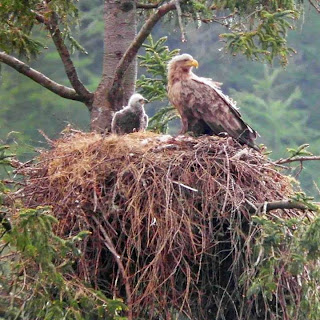
Iona with her new chick
 tall
covered with white downy fluff soon to be feathers.
Iona has been spending more time off the nest but in a tree near by not far away to protect the chick .
Fingal disappeared for two days but came back and was seen on Tuesday afternoon.

The food larder has reduced around the nest this week and so we have had good views of the chick this week.

Most of the food has been sea birds and fish we have had one lamb since we started on March 20th 2013. This came in over two weeks ago and there are still remnants of it on the nest.

I have noticed in the last two weeks several people revisiting us that came in March. It is excellent to see people coming back to this magical Island and seeing the wonderful views of the majestic birds.

We have had some excellent feed back again this week and I love working with John Clare the RSPB ranger who is very knowledgeable , I bring to the group my wealth of experience of visiting this island for 22 yrs and now living here permanently, having bought our house nine years ago.


John and I have been working hard on upgrading our Silver Green Tourism award  to Gold.  We have made a few changes to the site and also added such things as recycling rain water, cycle-stand made by recycled wood, green tourism feedback and suggestion box and a wind up torch. Not that we need it at the moment as its so light up here! 

During the week we have had people from America , Germany and Norway.
The German couple were late over due to ferry delays and arrived when we had just finished, so I took them down to the hide and they had their own private viewing. We had a wonderful time .
We also had another German gentleman who saw a black stork at Dervaig which he regularly sees in his home country.

On Wednesday the old nest Icthy and Scratchy arrived from Loch Frisa. This was the nest that was filmed by Simon King for Springwatch. It has many different memories for previous staff that worked at the hide and the public, who like myself, watched every programme religiously, in awe of these wonderful rare birds..

I will be using it as a demonstration piece to the groups and school children who are soon to visit .

Norwegian visitors to the Mull wildlife hide

We have had many visitors to the hide this week and the weather has been brilliant , so come and see us .

On Friday we had a group of Norwegian people visit. The group were from an organisation who organise wildlife trips, so they were interested in the running of the hide. They were particularly interested in the things that go on behind the scenes to make it work and of course the history of the birds, since the reintroduction programme was helped by Norway, providing the young chicks and the start of them living back on the Isle of Mull.
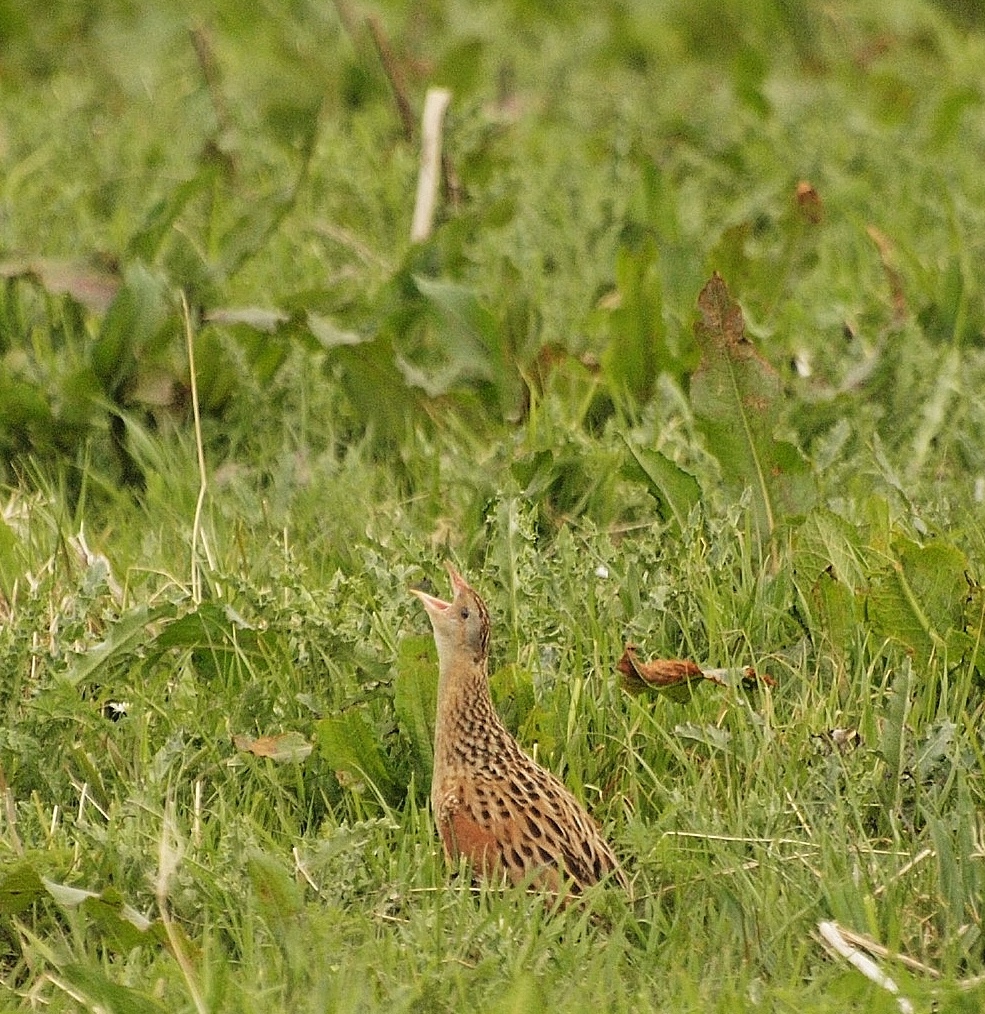
 I took a day off and managed to get a picture of that rare bird the corncrake so I have included it as I know many of you are serious about your birds!
 
Corncake on Mull
Corncake on Mull
A recent comment left by a visitor said "that is the best £6 I have spent on this island this week , the birds were fantastic,  great views and very helpful knowledgable guides in John and Cheryl."

So don't miss out, come and see us soon ... 01680 812556

You can also comment via Trip advisor, we welcome your feedback.

Blogs posted by Colin Baxter on behalf of Mull Ranger Cheryl Callow


Monday, 13 May 2013

Mull - a bird spotters paradise and maybe another chick?

Last week started off with thoughts of possibly two chicks in the nest. Monday brought heavy rain and Iona sat on her nest for most of the day protecting her brood. Tuesday came bringing sunshine and we were able to see the head of one small chick.

Iona at the nest with chich just visible behind

 I was able to take some photos of both Iona and Fingal on the nest, which is now becoming full of various carrion such as Gull, Fulmar and rabbits. This pair of WTE are known for taking sea birds based on previous research when cleaning up and analysing the content of the nest at the end of last season.
On Wednesday we had mixed weather and had large groups at the hide, who were treated to some action in the afternoon, when what was described as a grey bird flew in past the nest.

Rainbow over Loch Na Keal

The nearby Ravens were also making a lot of noise. I went off for 10 mins to go and see what was going on. I saw a large bird sitting off down the Glen towards Loch Scridain but could not identify it.

I came back and reported this to the group and John Clare the RSPB ranger. Later that day four very keen gentlemen birders left the hide and subsequently reported seeing an Osprey on Loch Scridain. Ospreys are infrequent visitors to Mull so this was a great spot!
Thursday continued with yet more well attended groups including some new honeymooner's - we have had seven couples now so far this season.

On the way to work yesterday I saw a wonderful rainbow over Loch Na Keal and on the way home, I caught up with the four gentlemen who had spotted the Osprey on Wednesday. On this occasion they were watching three Golden Eagles over Ben More. They reported seeing so much wonderful wildlife during their week on the island and this was now their fourth consecutive year visiting Mull.

Tuesday, 7 May 2013

First two chicks make an appearance on Mull!


Iona and Fingal at the nest
Iona and Fingal at the nest - by Claire Hammond
 The first chick hatched to Fingal and Iona on Friday 3rd May witnessed in pouring rain by John Clare the RSPB ranger .

The second chick hatched on Sunday 5th May, again witnessed by John Clare as he went  to check on the white tailed sea eagles over the weekend as it has been so wet.

Yesterday it rained all day and we arrived to find both Iona and Fingal on the nest eating some carrion that had been brought into the nest.

The female bird at different times has got up and moved around removing the rain from her body with a quick shake down and then back on the nest keeping the chicks protected.

Fingal flew off about 10.45 am and had not come back when we left at 3pm yesterday. Thankfully, the weather had justed started  to clear a little. I did hear him calling to her about 2pm when the public were in the hide so he was not far away.

We wish for some dry weather to give these chicks a chance this week .
No pics as yet but we hope to have some for the next update later this week....

Friday, 3 May 2013

It's a waiting game for the appearance of eagle chicks here on Mull

This week has been a very quiet week at the hide and we are playing the waiting game .

Our eggs are due to hatch any time now and everytime the adult bird on duty stands up on the nest we are waiting to see if the chicks have hatched!

The weather this week has been very mixed and the last three days have seen heavy showers and the temperature dropping to 4C which is quite cold.

The adults seem to be just turning the eggs and settling down to incubate again. Eggs can easily take 36 hours to hatch so we must all be patient and wait and see. John and i will be watching for any change in behaviour around the adults.

Last year the Mull Sea Eagles successfully fledged 19 eagle chicks with a total of 60 on the west Coast of scotland.

Our view from the hide is from the forest directly in front of the nest at a safe distance so as not to disturb the birds. Within the hide you get some excellent views of the nest and you feel close to nature, with the smell of the pine and clean air. It give you the ambiance of being close to the Eagles. The shaded area of the hide that you look out from gives great protection from disturbing them.

Some of our visitors in the hide

As you look out at this enormous nest you cannot help but feel privelaged to witness a very rare bird that has been reintroduced successfully into it's natural habitat.

Occassionally we hear the call of the male eagle Fingal as he does a fly past just before a change over on the nest or whilst roosting on a tree near by.

Iona the female eagle often looks up to the sky, with that beautiful large golden eye, keeping a check on Fingal and any one else close to the nest.

This week we have not seen any extra birds brave enough to fly into the nest like last week!

I hope to have some good news for you all next week on our eggs/chicks. Finger crossed for a good weekend.

Tuesday, 16 April 2013

Visitors young and old enjoy spectacular eagle sightings at our wildlife hide

Sea Eagle courtesy of Mark Blake Nottinghamwildlife.comIn the first three weeks of the season, glorious weather has helped give visitors spectacular views of the nest and birds, from the viewing area that enables a close encounter with these majestic creatures. 

Positioned amongst the trees, the viewing area allows clear sightings, while providing enough cover to prevent disturbance of the nesting birds. 

Numerous people, varying in age from young children to people in their eighties, have watched the birds. There have already been visits by three honeymoon couples, our local MP, and the Environment Minister who presented a £ 6,261 cheque to Mull and Iona community groups, comprising the money raised from Mull Eagle Watch in 2012.  This brings the total to well over £ 50,000.

Many excellent photographs have been taken and reactions and feedback from all the visitors has been tremendous, with one man in his 60’s, who has been trying unsuccessfully to see an eagle for over 20 years, in tears.  Memorable moments so far have included the interaction of both adult birds on the nest with much rearrangement of nest material and calling. 

The presence in the sky above the nest for a short while of an ‘intruder’ white-tailed eagle juvenile from the east coast of Scotland also lead to much vocalisation, while the arrival at speed of a female sparrowhawk in the viewing area almost lead to agitation of a different kind.  Other highlights included close views of a treecreeper’s antics delicately picking insects from adjacent tree trunks above visitors heads and regular visits of a friendly robin, which kept everyone entertained.

All is looking well for an excellent season and we hope to post a range of images taken at the hide this year over the course of the next few months.

Friday, 5 April 2013

Our Eagles and other wildlife enjoy Mull's great Easter weather

Mull White Tailed Eagles
The weather this Easter week has been fantastic on the Isle of Mull. Iona, the hen bird has been busy sitting on her eggs in the warmth of the sun incubating. Fingal the male has been busy too, making sure the nest is kept fresh with larch and melina (white hill) grass .

He has also been bringing in food for his mate, in the form of large fish and small mammals each day.
There have been several change overs which we have witness at the hide with Iona going off to have a break and feed herself.
Our visitors have been treated to a number of great sightings and yesterday afternoon they witnessed Fingal on the nest calling out for Iona. This was a new noise to many of the children and adults visiting the hide, who had never heard eagle conversation before.

We have also had the delight of a visiting sparrowhawk at our woodland hide, who boldly flies through the hide to the amazement of our visitors! Other visiting wildlife include a small robin at the hide who greets us on a daily basis, whilst we are keeping our eyes peeled for the Scottish Crossbill that is resident in these woods too but no sightings as yet.

Other birds of interest are the local buzzards ,who nest near by and the regular female hen harrier who cleared all of  the chaffinches off the feeders at the reception hide on Tuesday with ease. The male chaffinches are in abundance too on the spruce tree on the feeders in their bright red colour, just like Christmas baubles.

The weather for the week is looking very good so if you are planning a visit to Mull, don't forget to book a trip to the Eagle Hide.

Thursday, 28 March 2013

Mull Eagle Hide now open for 2013


Our first visitors of 2013 ready to enjoy their trip to the
Our first visitors of 2013 ready to enjoy their trip to the
eagle hide at Glen Seilisdeir 

The wait is finally over and the Eagle Hide on Mull is now open for the 2013 season.

The first visitors arrived on Monday 25th March and were joined by John Clare, the RSPB Ranger and Cheryl Callow, the Seasonal Ranger for the island.

The weather has been kind to Mull over the last year and although it has been cold we have not had the weather that has hit the Isle of Arran and Ireland.

Bookings to visit the hide are a must and you can reserve your place by calling 01680 812556. The trips will  run daily from Easter weekend to October and last approximately 2 hours, subject to availability.

Costs are Adults £6 (including RSPB members), under 16’s £3. Trips to permanent Mull residents are free.

Both Fingal  and Iona the resident White Tailed Sea Eagles are ready and waiting to greet you at the nest.

We look forward to welcoming you to Mull.

Tuesday, 11 September 2012

A great year for our white tailed eagles at Mull Eagle Watch


White tailed eagle
After a fantastic season the Eagle viewing hide at Glen Seilisdeir is now closed. Iona and Fingal successfully fledged two chicks, and the family can still be seen in the area.
However, there are still plenty of opportunities to view White Tailed Eagles around the island. The eagles don’t migrate and can be seen hunting for fish and seabirds over the lochs and sea, as well as looking for rabbits or hares inland. During the autumn the young birds tend to congregate together, sitting in trees or on the ground near to the coastline, whilst the adult birds will stay in and around their home territory.

Mull is not known as “Eagle Island” for nothing, and hosts one of the highest density populations of Golden Eagles in Europe, although these shy birds are more difficult to see as they keep well away from people.

If you are struggling to tell the difference between the two species, the adult White Tailed Eagle (the fourth largest eagle in the world) has a wingspan of 2.4 metres, stands about a metre high and weighs in at 7 kilos. It is a light brown colour with a paler head. When flying its broad wings are held in a flat profile and the adult’s white tail is short and wedge-shaped, leading to it being referred to as a “flying barn door”. The juvenile eagles are a dark, chocolate brown colour all over and don’t have the white tail initially, with those feathers moulting in over the next four or five years until it is ready to breed.

By comparison the Golden Eagle has a wingspan of around 2 metres and is a golden brown all over. It holds its wings in a shallow V-shape when flying, and is often seen flying high over the hills “hugging” the ridges whilst it searches for prey. Its tail is rectangular in shape and longer than the Sea Eagles. Juvenile Golden Eagles have white patches under its wings and a white rump at the top of its tail. They feed mostly on mammals and birds but are much more difficult to see than the White Tailed Eagles which are often seen perched in trees or on rocks.

If you see a large brown and cream raptor hanging in the sky (as if hovering) it will not be an eagle. Buzzards and Hen Harriers do this, but the eagles’ body weight is too high for their wings to support hovering.

The eagle hide will remain closed during the winter months whilst this year’s youngsters gradually moving away from their parents and, come December, the adult birds will start looking for nest sites or maybe adding to existing ones. Come February their courtship rituals will begin and by March they will be ready to start nesting. The birds are heavily protected under the Wildlife and Countryside Act, and at this time they are very sensitive to disturbance.

Watch this space for information on where and when the 2013 hide will be opening or visit our web pages.

Tuesday, 28 August 2012

An empty nest, and all's well at Glen Seilisdeir


Adult Sea Eagle being mobbed by a Hooded Crow
(Photo: Sue Dewar)
 Firstly, my apologies for the gap between postings. The last couple of weeks has been hectic to say the least and I’ve barely been in the office.

The good news is that our second chick finally left the nest just over three weeks after his sister. To begin with the female chick kept returning to the nest as the adult birds were still feeding her brother there, and if the adults weren’t around she continued to bully him and snatch his food.

Thankfully, Iona was usually on hand to see
fair play, and eventually her daughter discovered that she could fly just as well as her parents and began to concentrate on following them and learning to hunt for herself. She has given us some great displays but the highlight was one day when both adults and the female flew together over the forest and up towards Ben More, getting higher and higher until the three of them were just dots in the sky. A cheeky Buzzard mobbed the young female relentlessly but she was having none of it and managed to shake him off.

Once the young male was allowed to eat his food in peace he really started to fill out, his tail and flight feathers grew down properly and he began wing-flapping exercises to strengthen his muscles ready for his first flight. Sadly we weren’t around when he finally took off, but the following morning we could hear him calling from somewhere in the forest and after a few days he proved that he too could fly when he appeared back on the nest. The adult birds occasionally bring food in and leave it there (and it doesn't take long for the chicks to find it), but most of the time they are trying to encourage both fledglings to follow them and learn how to hunt for themselves.

After the wonderful weather we have had on Mull this summer, yesterday we had torrential rain and strong winds and when I went to the hide I was relieved that the chicks had fledged as they would have been wet and miserable sitting up there exposed to the elements.

With the Scottish children back to school now I can now tell you that Bunessan Primary School (whose turn it was to name our chicks) decided to call the young birds after their school colours. So our young male is Gorm (pronounced Gorum) which is Gaelic for Blue, and the female is Buidhe (pronounced Bweeya), Gaelic for Yellow. Both chicks will stay in the area with Iona and Fingal for several weeks yet, perfecting their hunting and flying skills before eventually exploring the rest of the island and beyond. For a while they may enjoy the company of other young Sea Eagles fledged on Mull this year; in the autumn we often see groups of them perched together like a Sea Eagle youth club! Then they will begin their four-year journey of discovery, each year their tail feathers becoming whiter, their beaks turning yellow and their body and head feathers becoming paler, until at five years old they will look just like their parents. At that stage they will be searching for a mate and a territory of their own - who knows where they will end up?


This is our last week at Glen Seilisdeir - the hide closes on Friday 31st August as essential logging operations begin in the forest on Monday. It has all gone far too quickly, but it has been a real privilege to watch Iona and Fingal incubate their precious eggs through to hatching, and to watch Buidhe and Gorm grow from wobbly four-inch high, fluffy white chicks to full-grown magnificent Sea Eagles. Over the next few days I will gather together all the images that I (and others) have taken at the hide and post them on my final blog for this year.

Monday, 30 July 2012

Now you see her, now you don't!

Well, last week saw some interesting goings on at the Sea Eagle Nest. Previously I reported that our largest chick (thought to be a female) fledged from the nest leaving her smaller sibling to spend time putting on weight and growing down his(?) last flight feathers before fledging himself. All seemed to be normal with food being brought into the remaining chick by the parent birds, and it appeared to be putting on weight and growing apace.

And then, on Wednesday the older chick suddenly appeared back on the nest, much to the surprise of its sibling. Not only that but it stayed throughout Wednesday and Thursday. This is unusual behaviour, as once the birds fledge it is unusual for them to return to the nest. Our theory is that the older chick worked out that the adults were feeding its sibling, therefore there must be food at the nest. Sure enough, the first time the adult male came in with food for the smaller chick (a large, wriggling eel), the fledgling shoulder-barged it out of the way and grabbed the food for itself. As before, the small chick immediately retreated to the other side of the nest, once again intimidated by its sister. However, this time the fledgling failed, as in her haste to grab the prey it escaped and fell onto the side of the nest where it was grabbed again by the adult male who quickly swallowed it whole.

Soon after the female came in with what looked like a Fulmar and delivered it straight to the smaller chick whilst blocking the fledgling so that her brother could eat in peace. Both adults then remained at the nest for the rest of the day, mediating between their chicks. After I'd left the hide one of the adults must have brought in a rabbit, as the following morning the smaller chick was pulling at the remains of a rabbit leg; who knows which chick got the lion's share of that meal!
Fingal with food for a hungry young eagle
Photo by kind permission of Chris Stone
 The following day the whole scenario was repeated, with at least one adult around to see fair play, though later in the day they both took off, presumably to hunt for themselves, and although I stayed at the hide until gone 9pm neither of them returned to the nest. Both chicks were at the nest all day, but my colleague - FCS Wildlife Ranger Steve Irvine - reported that on Friday only the younger chick was there with an adult visiting the nest and then sitting higher in the tree keeping watch. Maybe the older chick got the message that trying to steal food from her sibling was not to be encouraged by her parents.


The chicks are now a little over twelve weeks old and it won't be too long before the second young eagle fledges. I can't wait to watch them learning to fly strongly and hunt for themselves - with a little help from their parents, of course.


Friday, 20 July 2012

We have lift off!

Three week old chicks - helpless and looking more like
ET than a Sea Eagle! (Photo: Justin Grant)
Yesterday our first chick finally took to the skies - briefly. It had been getting more and more adventurous over the last few days, jumping in and out of the nest, walking along the branches towards the next tree, and flapping its wings like mad. Rather than gripping on with its talons, it has been using the nest as a trampoline, getting higher and higher each time. And then, with one huge jump it spread its great wings and took off, doing a circuit of the tree, gliding down below the nest before circling round and landing again next to its sibling. Whilst we watched it did the same again twice more, each time flying a little further.

During the day there was no sign of our adult birds. They had probably brought food in for their chicks before we arrived, and then flown off to hunt for themselves. I wonder if they had been perched up in the trees opposite the nest watching their youngster's antics from afar.

The younger bird is growing faster now and getting more adventurous, also flapping its wings and venturing to the edge of the nest. It seemed totally flumoxed by the antics of its sibling, looking around the nest when it took off and then showing surprise when it landed back.

The film crew who have been positioned in a hide nearby have been able to zoom in on the birds and tell me that it will be a while yet before the second chick fledges. When the adult feathers grow down they are protected by a waxy sheath which gradually peels off before the feather unfurls. The younger bird still has a lot of flight feathers still "in the blood" as it is known, and will not be able to fly properly until they have grown through. Once the larger chick has fledged completely, the other chick will be getting first pickings of the food its parents bring in, so it will soon catch up, and then we'll be able to watch it take to the skies too. It's hard to leave the hide each evening with so much going on.
Our six week old chicks with mum Iona.
(Photo: Sue Dewar)


We have also had two sub-adult Sea Eagles in the area - one about two or three years old, and the other a bit older. The younger one has been in to look at the nest whilst Iona and Fingal have been away hunting and I wonder whether it is a bird which fledged from this pair in the past. It has kept its distance when the adults are about - very wise as they would not be happy if they found it close to the nest.

Hopefully I will be able to get some pictures of the chick flying as it becomes more proficient; something tells me I will not be able to stay away this weekend!!


Wednesday, 20 June 2012

Drama at the nest

The Sea Eagle chicks are now seven weeks old and still growing rapidly. They are much more active on the nest now, pulling apart their own food when the adults are away although Iona still tries to feed them, tearing off tiny pieces of food as if they were still very small. Their diet has been very varied this week with fish, seabirds, pieces of a dead seal etc. and yesterday Fingal excelled himself by bringing in a mink. The chicks made short work of it but had to share it with their mother who is obviously very partial to mink.

We have yet to find out the sexes of the two chicks but, if I had to make a guess I would say that we have a male and a female as one chick is much bigger than the other and with only two days between hatching there would not usually be such a large size difference. The larger bird has already started standing on the edge of the nest and exercising its wings although it will be three to five weeks or more before it is ready to fledge. It's always a frightening time for those of us watching the nest when the chicks are wing-flapping as they stand right at the edge of the nest and it's a long way down if they slip.

Visitors at the viewing hide
Visitors at the viewing hide.  Photo Sue Dewar
Yesterday afternoon there was plenty of drama with the local Buzzard coming rather too close to the nest for comfort again. We can just hear the Buzzard chicks calling for food in the background, so the temptation for the adult to steal a piece of food from the eagle nest must have brought the adult Buzzard in.

It was not a good plan, though, as both adult eagles were at the nest and Fingal flew up, flipped over backwards with his talons in the air, and tried to grab the Buzzard. Although he didn't manage to catch it, the Buzzard got the message and took off with Fingal in hot pursuit. Our chicks are now much the same size as the Buzzard so we weren't worried that they were at risk, but the parent birds were outraged at the audacity of the smaller raptor trying to take the food that they had caught for their own chicks. It was an exciting time for our visitors and ourselves, but after half an hour everything had settled down and the nest returned to being a peaceful family roost.

Next week I am on annual leave so I can only imagine how much the chicks will have grown by the time I come back.


Monday, 11 June 2012

Mull Sea Eagles go green (and silver!)

Following our recent assessment for the Green Tourism Business Scheme (run by Visit Scotland), I'm delighted to say that we have been awarded a Silver award for the Eagle Hide. I'm told that it is not often for a Silver to be awarded at the first attempt so we are very proud.

Although we don't need to generate much electricity, our TV monitor and CCTV camera with all the attendant wiring are run from our bank of solar panels, and we have the option of a small wind turbine if we need any further power.

Over the last two weeks we have been visited by primary school children from all over the island and they have had a great time watching our rapidly growing chicks on the nest, learning the story of the White-tailed Sea Eagles and impressing us with their own knowledge of the eagles and other birds of prey on the island. Before going to the viewing hide the children built a life-size eagle nest out of branches, twigs and sprays of foliage collected from the forest.

Lochdon School sitting on the nest frame
Lochdon School sitting on
the nest frame before building

The children had great fun building the nest and all were surprised at the size of nest needed for the adult Sea Eagles and their rapidly growing offspring. Iona and Fingal's nest is about 2m across by 0.75m deep, and is extended every year the birds use it. By the time the children got to see the eagles through our telescopes they had realised just how much work the adult birds had to do before they could lay their precious eggs.
 
The hide continues to be as busy as ever, and our two chicks are now five weeks old. Both are doing well, and I hope to have more news of them when they have been ringed.


Ulva Ferry School with their finished nes
Ulva Ferry School with
their finished nes
 In the meantime, if you are planning a visit to the hide please book as far ahead as possible as most of our trips are filling up very quickly, and we don't want anyone to be disappointed.

Stop Press: We have been told that the footage taken by Iolo Williams at our hide will appear on the BBC Springwatch programme on Monday 11th June (or possibly later that week).


Monday, 21 May 2012

Four stars for our eagle family

We have just heard that Visit Scotland have awarded us four stars at the new Glen Seilisdeir hide - the same as we were granted at Loch Frisa!

iona and fingal
Iona feeding one of the chicks  Photo: Sue Dewar
Our chicks are growing rapidly - instead of fluffy white heads and bodies they now appear grey where the adult feathers are just beginning to show through under the down.

On one day last week the rain poured down incessantly and the adult birds took turns in brooding the youngsters, only standing up to feed them whilst spreading their wings like umbrellas to shelter them from the wet. I am beginning to think that Sea Eagles have an inbuilt weather forecast as the previous day they brought in loads of food including what looked like a large rabbit, so there was plenty for the whole family to eat, even if the weather was too bad to allow the adults to hunt.

 
iona and fingal
Iona and Fingal above the nest
Photo: Sue Dewar
 On Friday the adults spent the day warding off two cheeky hooded crows who were either trying to steal food (or maybe the chicks) from the nest, or constantly dive bombing the adults. Each time they appeared Iona called loudly and Fingal was heard calling back from a short distance away. He then flew in to the nest with the crows in hot pursuit, even making contact from time to time.

Eventually the crows gave up after several skirmishes, and the adults decided that the chicks could have the nest to themselves for a while, but neither of them were prepared to leave altogether, and spent the rest of the afternoon sitting on branches above the nest keeping watch. The chicks no longer need brooding all the time; they will be three weeks old this week and have been able to regulate their own body temperature for almost a week now. By the time they are four weeks old they will be beginning to look like Sea Eagles and will start playing tug-of-war with their food.

This week we have our first school visit of the season from Lochdon Primary School, and the forecast looks promising so we should have good views of the eagles and plenty of fun outside.